Mini drones are a great starting point for new pilots because they combine compact dimensions, straightforward controls and useful beginner-friendly features in an easy-to-carry package. They are suitable for learning basic flight control, practising take-offs and landings, and discovering aerial photography without immediately moving to a larger or more complex aircraft.
In this updated 2026 guide, we look at three mini drones currently available on All About Drones and explain the features beginners should consider before choosing their first model.
Explore Beginner-Friendly Drones
Browse our complete Mini Drones collection or compare simpler recreational models in our Toy Drones category.
If you're completely new to flying, read How to Choose Your First Mini Drone for more help understanding the basics.
Why Choose a Mini Drone as Your First Drone?
Mini drones are designed around portability and ease of use. Their smaller size makes them convenient to store and transport, while many current models include features intended to make flying less intimidating for beginners.
Depending on the model, useful beginner features can include:
- One-button take-off and landing
- Altitude hold or precise hovering
- GPS-assisted flight
- Return-to-home functions
- Compact or foldable construction
- Camera stabilisation
- Automated photo and video modes
- Simple app or controller operation
The right choice depends on whether you primarily want to learn basic flying, take photographs and video, travel with your drone, or develop your skills before moving to a more advanced aircraft.
Our Featured Mini Drones for Beginners
Falcon Mini 4K Camera Drone for Beginners
The Falcon Mini 4K is specifically positioned as a beginner-friendly compact camera drone. Its foldable design makes it easy to carry, while one-key take-off and landing and altitude hold are useful features for new pilots learning the basics.
It also offers 4K video recording, a 3-axis gimbal, GPS navigation and return-to-home functionality, giving beginners room to explore aerial photography as their confidence develops.

Falcon Mini 4K Camera Drone for Beginners
Experience stunning aerial photography and easy flying fun with this compact and user-friendly drone
Product information
Product Review Score
4.24 out of 5 stars
(25 reviews)Product links
DJI Mini 3 Fly More Combo with Controller
The DJI Mini 3 Fly More Combo is a stronger option for beginners who want a complete package rather than just an entry-level aircraft. Its compact design is paired with 4K video capability, an included controller and additional batteries for longer flying sessions.
Its straightforward controls and automated shooting features make it suitable for new pilots, while its camera and flight capabilities provide enough scope to remain useful as flying skills improve.
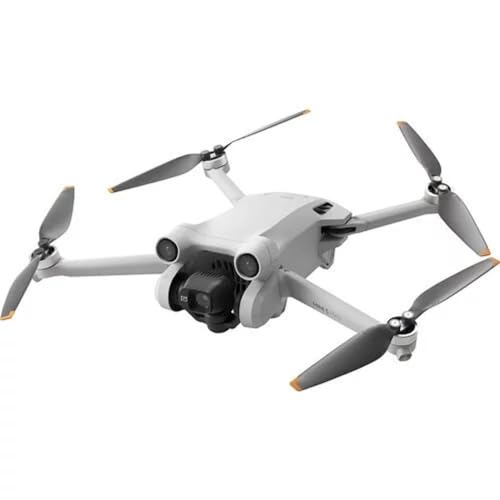
DJI Mini 3 Fly More Combo with Controller
Experience stunning aerial photography and an extended flight time with everything you need in one package
Product information
Product Review Score
4.19 out of 5 stars
(144 reviews)Product links
DJI Mini 3 Drone with 4K HDR Camera
The DJI Mini 3 with 4K HDR camera is another option for beginners who place greater emphasis on aerial photography and video. It combines a lightweight, compact design with a 3-axis gimbal, GPS-assisted hovering, automatic take-off and landing and return-to-home functionality.
It is particularly suited to users who want a mini drone that can serve as both a learning platform and a capable travel camera drone.
Which Mini Drone Is Best for a Complete Beginner?
A first-time pilot should prioritise predictable controls and useful safety-oriented flight features rather than simply choosing the drone with the longest specification list.
Look for a model that makes the fundamentals easier to learn:
- Stable hovering: Helps you practise orientation and control without constantly correcting the aircraft.
- Simple take-off and landing: Reduces the workload during the most important parts of a flight.
- Clear controller layout: Makes learning throttle, yaw, pitch and roll more intuitive.
- Return-to-home: Useful on compatible GPS-equipped models when additional assistance is needed.
- Durable or compact construction: Particularly useful while you're still developing confidence.
Mini Drone Camera Quality
Not every beginner needs a sophisticated camera. If your main goal is learning to fly, stable handling may matter more than resolution.
If aerial photography is important, look beyond the headline resolution and consider stabilisation as well. A 3-axis gimbal can help produce smoother footage by compensating for movement during flight.
For a wider selection of photography-focused aircraft, visit our Camera Drones category or read our Best Camera Drones Under £500 guide.
Flight Time and Batteries
Flight time affects how much useful practice you can get from each session. Longer flights give beginners more time to become comfortable with the controls before returning to recharge.
Extra batteries can also make a substantial difference. A bundle containing multiple batteries may be more convenient for regular flying than repeatedly stopping after a single battery is depleted.
When comparing models, check what is actually included with the package rather than assuming every version of the same drone comes with identical batteries or accessories.
Mini Drones for Travel
Compact and foldable drones are particularly attractive for travel. They take up less room in a backpack and can be easier to transport alongside controllers, batteries and other accessories.
Before travelling, consider the complete setup rather than the drone alone. A controller, spare batteries, charging equipment and protective case can considerably increase the amount of space required.
For carrying and protection options, browse our Drone Cases & Bags category.
What Should Beginners Practise First?
New pilots should build confidence gradually rather than trying advanced manoeuvres immediately.
- Learn the controller layout before take-off.
- Practise gentle take-offs and controlled landings.
- Hold a steady hover at a comfortable height.
- Practise slow forward, backward and sideways movement.
- Learn how the drone behaves when its orientation changes.
- Only move to faster or more complex flying once basic control feels natural.
Starting slowly makes it easier to understand how your drone reacts to each control input and gives you a stronger foundation for more advanced flying.
Beginner Mini Drone Buying Checklist
Before choosing your first mini drone, compare:
- Ease of control
- Hovering and GPS features
- Take-off and landing assistance
- Camera resolution and stabilisation
- Flight time
- Number of included batteries
- Controller type
- Folded and unfolded size
- Replacement parts and accessories
- Your actual reason for buying the drone
A beginner who mainly wants flying practice may need a very different model from someone who wants a compact drone for travel photography.
Mini Drone vs Toy Drone: Which Should You Choose?
Toy drones can be an inexpensive way to experience basic drone controls and recreational indoor flying. Mini drones cover a broader range, from simple beginner aircraft through to compact camera drones with GPS, stabilised cameras and automated flight features.
If you're primarily interested in inexpensive flying fun, explore our Toy Drones. If you want more scope for photography and longer-term use, our Mini Drones collection is the better place to compare options.
Final Thoughts
The best mini drone for a beginner isn't necessarily the model with the most advanced specification. It is the drone that matches how you want to learn and gives you controls and features that you can use confidently.
The Falcon Mini 4K offers a particularly beginner-focused feature set, while the DJI Mini 3 options provide a natural step up for users who want stronger camera capabilities and a platform they can continue using as their skills develop.
Take some time to compare the models above, then browse our complete Mini Drones collection and full drone range to find the right model for your first flights.